What Consumers and Insurers Can Expect in 2026
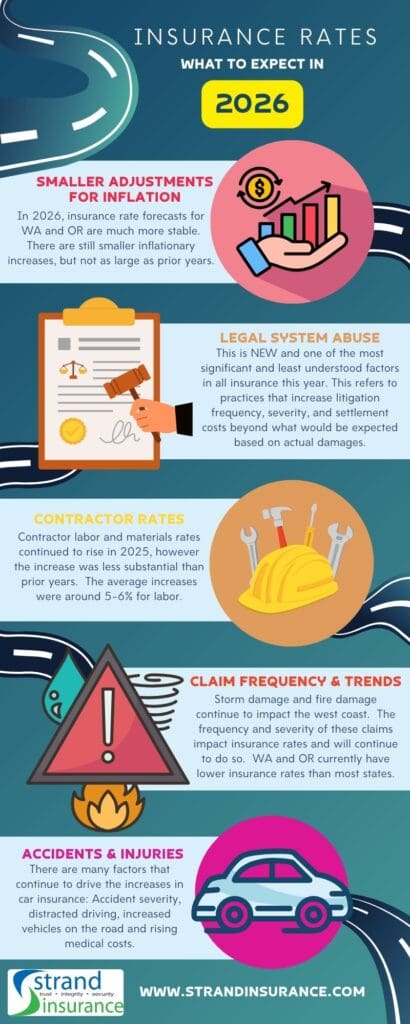
Putting it all together, the insurance outlook for 2026 is cautiously optimistic:
-
Home and auto rates should be more stable overall
-
Liability coverage will continue to feel pressure from legal trends
-
Home insurance costs will remain sensitive to labor-driven rebuild inflation
For consumers, this is a good time to review coverage limits, ensure replacement costs are accurate, and explore loss-prevention measures that can help control premiums. For insurers, the focus will remain on disciplined underwriting, advocacy for legal reform, and improved modeling of labor-related rebuild costs.
Legal System Abuse and Its Impact on Liability Costs
One of the most significant and least understood drivers of insurance premiums is legal system abuse. This refers to practices that increase litigation frequency, severity, and settlement costs beyond what would be expected based on actual damages.
Key Contributors to Legal System Abuse
-
Third-party litigation funding, where investors finance lawsuits in exchange for a share of settlements
-
Nuclear verdicts, where jury awards far exceed historical norms
-
Expanded liability theories, increasing the number of parties named in lawsuits
-
Aggressive advertising, encouraging more claims and lawsuits
These trends disproportionately impact auto liability, umbrella, and commercial liability coverage, but no type of insurance is immune. Even when insurers successfully defend claims, the legal expenses alone significantly raise costs.
Why This Matters for 2026 Rates
While property losses fluctuate year to year, legal system abuse creates persistent upward pressure on liability premiums. Even in a stable rate environment, insurers must price policies to account for unpredictable jury awards and escalating defense costs. Without meaningful legal reform, liability-related premiums are likely to remain a challenging area within otherwise stabilizing markets.