
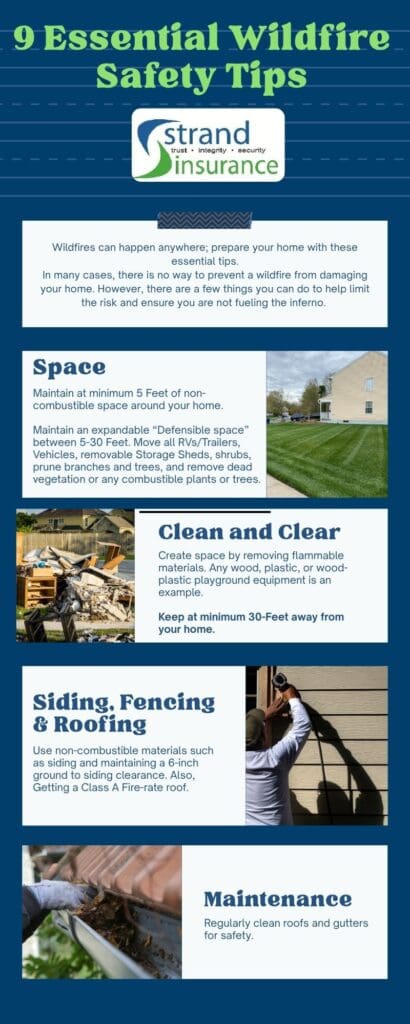
Wildfires are a growing concern across the United States, and if you live in a fire-prone area, you might be wondering how to minimize the risk of wildfire damage to your home. While it may not be possible to completely prevent wildfire damage, there are several proactive steps you can take to protect your property and reduce the chances of fueling a fire. Let’s dive into some practical tips that can make a big difference!
Creating a Defensible Space
One of the most effective ways to protect your home is by creating a defensible space around it. This involves maintaining at least a 5-foot zone of non-combustible materials such as gravel, brick, or concrete adjacent to your home. This buffer zone can help prevent flames from reaching your house.
Beyond the immediate 5 feet, aim to maintain an expandable defensible space up to 30 feet from your home. This means moving RVs, trailers, vehicles, and any removable storage sheds out of this area. Also, be sure to prune branches, remove shrubs, and clear away dead vegetation or any combustible plants or trees. Think of it as giving your home a little breathing room!
Building with Fire-Resistant Materials
When it comes to your home’s construction, using non-combustible materials can make a significant difference. Consider siding options that are fire-resistant and maintain a 6-inch ground-to-siding clearance. If you’re in the market for a new roof, opt for a Class A fire-rated roof, which offers the highest level of protection.
Regular Maintenance is Key
Keeping your roof and gutters clean is crucial in preventing debris from igniting. Use non-combustible gutter covers to minimize the risk of embers starting a fire. Additionally, make sure your vents are covered with 1/8-inch mesh to keep embers out, and box-in eaves for extra protection.
Additional Precautions
If a wildfire is approaching, close all windows to keep embers out. Multi-paned and tempered glass windows can provide extra protection against heat and flames. Fireproofing decks or porches is also a smart move; use deck boards that comply with your state’s requirements for new constructions in wildfire-prone areas.
Lastly, keep all combustible materials, such as wood, plastic, or wood-plastic playground equipment, at least 30 feet away from your home. This reduces the risk of these items catching fire and spreading to your house.
Taking these steps can significantly reduce the risk of wildfire damage to your home and personal property. If you have any questions or need further guidance, don’t hesitate to reach out to our agency. We’re here to help you protect what matters most!